Filed and Forgotten: The Ticking Legal Time Bomb Inside Your Safety Policy Folder

There is a particular kind of organisational complacency that is both entirely understandable and profoundly dangerous. It begins the day a business completes its health and safety policy, files it neatly away — physically or digitally — and then, under the pressure of daily operations, never looks at it again. Months pass. Then years. Staff change, processes evolve, new equipment arrives, legislation is amended. The policy, meanwhile, remains frozen in the moment it was written.
For thousands of UK businesses, this is not a hypothetical scenario. It is the operational reality. And it is one that regulators, enforcement officers, and civil courts are increasingly unwilling to overlook.
The Legal Obligation That Many Employers Quietly Ignore
Section 2(3) of the Health and Safety at Work etc. Act 1974 requires employers with five or more employees to prepare — and, crucially, revise — a written statement of their general health and safety policy. The word "revise" is not decorative. It carries legal weight.
The Management of Health and Safety at Work Regulations 1999 reinforce this obligation by requiring employers to conduct suitable and sufficient risk assessments and to review those assessments when there is reason to suspect they are no longer valid. A significant change in the workforce, the introduction of new machinery, a structural alteration to premises, or a shift in working patterns can each constitute such a reason.
Despite this clarity, the Health and Safety Executive (HSE) continues to encounter businesses presenting documentation that predates current management structures, references equipment that has since been decommissioned, or describes procedures that no longer bear any relation to how work is actually carried out. In enforcement terms, such documentation is not merely unhelpful — it can actively demonstrate a failure of duty.
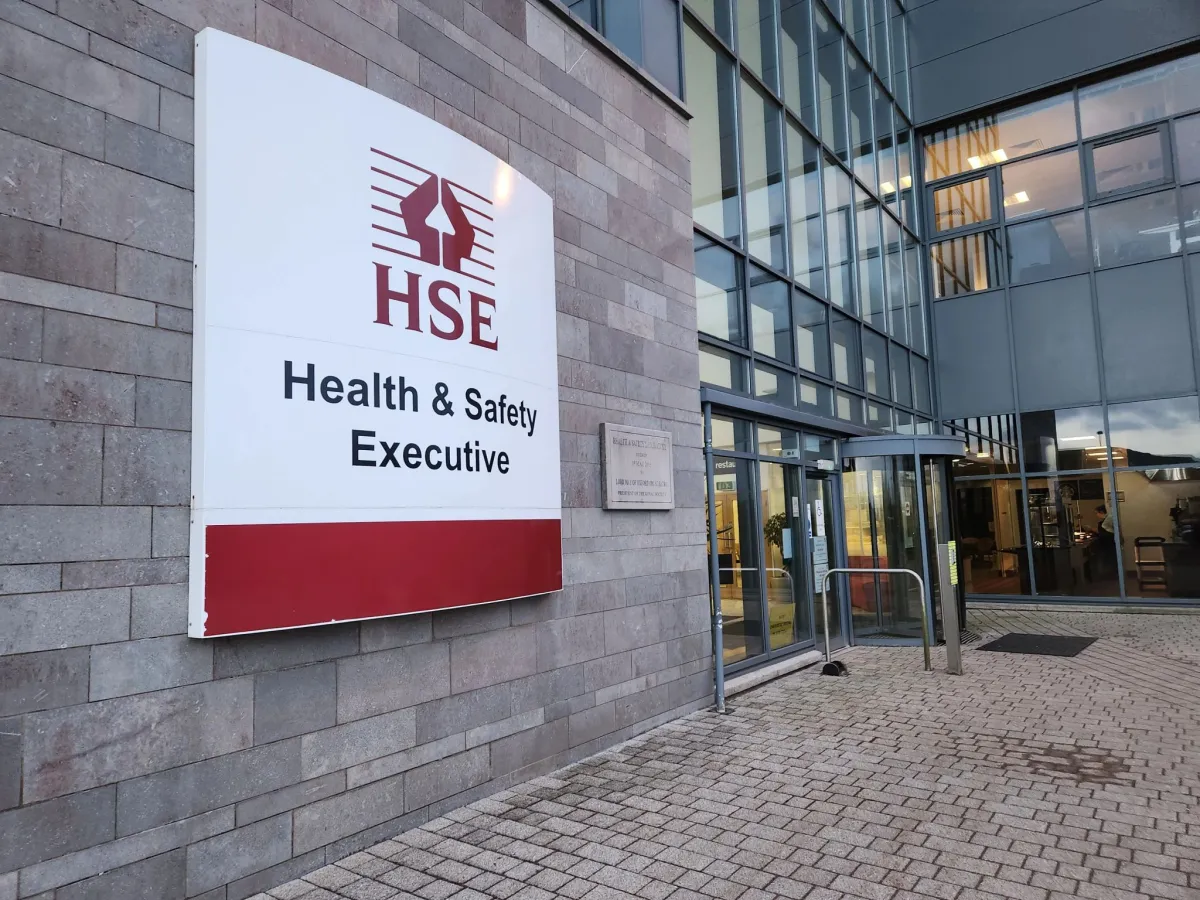 Photo: Health and Safety Executive, via threerivershealthandsafety.co.uk
Why Outdated Policies Are Worse Than No Policy at All
There is a counterintuitive but important point to understand here: a safety policy that is demonstrably out of date may place a business in a worse legal position than one that acknowledges its documentation gaps and is actively working to address them.
When an incident occurs and investigators examine a company's safety policy, they are not simply checking for its existence. They are assessing whether it reflects the actual conditions under which work was being performed at the time of the incident. A policy that describes a workforce of twelve when eighty people are employed, or that outlines lone-worker procedures written before remote working became standard practice, signals to enforcement bodies that the organisation has not genuinely engaged with its safety obligations.
In civil litigation, claimants' solicitors routinely request copies of safety policies as part of the discovery process. An outdated document can serve as compelling evidence that an employer failed to maintain adequate oversight — regardless of how the accident itself occurred.
The Industries Most Vulnerable to Documentation Drift
Certain sectors face heightened exposure to this problem, typically those characterised by rapid growth, high staff turnover, or frequent operational change.
Construction and contracting firms often produce safety policies during the tender process and then fail to update them as project scopes evolve, subcontractors rotate, or site conditions change. Hospitality and retail businesses, particularly those that have expanded through additional premises or franchise arrangements, frequently operate with policies that reflect original single-site conditions rather than the complexity of a multi-location operation.
Healthcare and social care providers face perhaps the sharpest risk of all. The regulatory landscape governing care environments is subject to frequent revision, and a policy written prior to amendments to the Care Quality Commission's fundamental standards, for instance, may leave an operator unable to demonstrate compliance with current requirements.
 Photo: Care Quality Commission, via media-cdn.tripadvisor.com
Manufacturing businesses that have introduced automation or new production processes without updating their risk assessments and associated policies are similarly exposed, particularly given the HSE's ongoing focus on machinery safety standards.
What a Genuine Policy Review Looks Like
The temptation, when organisations do turn their attention to safety documentation, is to treat the process as an administrative exercise — updating dates, amending job titles, and re-issuing the document with minimal substantive change. This approach satisfies nobody and protects no one.
A meaningful policy review begins with a comparison between the document as written and the organisation as it actually operates. This means walking the floor, speaking with operational staff, reviewing incident logs, examining any changes to equipment or premises, and cross-referencing current regulatory requirements against the policy's stated procedures.
Key questions include: Does the policy accurately identify who holds specific safety responsibilities? Does it reflect the current workforce composition, including part-time, agency, and remote workers? Have any new substances, processes, or hazards been introduced that are not addressed? Has relevant legislation changed since the policy was last reviewed?
Where gaps are identified, they must be addressed substantively, not cosmetically. Revised policies should be formally issued, communicated to all relevant staff, and — critically — the date and nature of the review should be documented.
Building a Review Cycle That Holds
The most effective organisations treat safety policy review not as a reactive task but as a scheduled, recurring process embedded within their governance calendar. Annual reviews represent a sensible minimum for most businesses, with interim reviews triggered by any significant operational change, a reportable incident, a change in relevant legislation, or the arrival of new HSE guidance.
Appointing a named individual — whether an internal safety officer or an external competent person — with explicit responsibility for maintaining and reviewing documentation creates accountability. It also demonstrates to regulators that the organisation takes its obligations seriously, which carries weight in enforcement decisions.
At National Safety Inspections, we work with businesses across the UK to assess the currency and adequacy of their safety documentation, identifying gaps before they become liabilities. The filing cabinet that holds your safety policy should be a resource, not a graveyard. The difference between the two is a review that has actually happened.
The Regulator Will Not Wait for You to Be Ready
HSE inspectors do not announce their visits with sufficient notice for documentation to be hastily updated. Local authority environmental health officers conducting routine inspections expect to find policies that are current, relevant, and demonstrably understood by the staff they govern.
The question every UK employer should ask is not whether their safety policy exists — most know it does. The question is whether it would withstand scrutiny today, in the context of how the business actually operates right now. For a significant proportion, the honest answer is that it would not. The time to discover that is before an inspector asks the same question.