The Refurbishment Blind Spot: How Office Fit-Outs Are Erasing Fire Safety Certification Across the UK
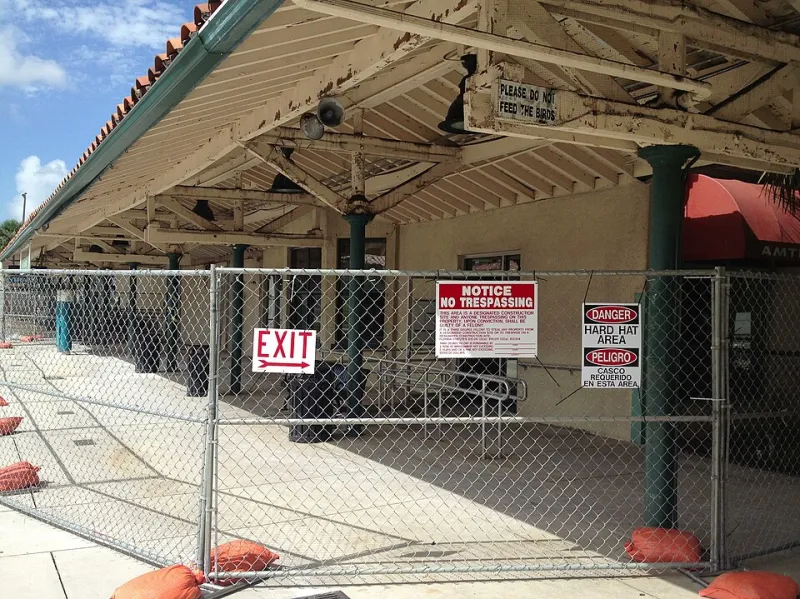
Photo: Phillip Pessar, CC BY 2.0, via Wikimedia Commons
The post-pandemic scramble to make offices worthy of the commute has produced something of a refurbishment gold rush across the UK. Businesses are investing heavily in collaborative spaces, improved amenity, and environments designed to compete with the appeal of working from home. Architects are busy. Fit-out contractors are booked months in advance. And quietly, systematically, fire safety certification is being rendered obsolete across millions of square feet of commercial space.
The mechanism is straightforward, the consequences serious, and the accountability — in too many cases — entirely unclear.
How Refurbishment Undoes Certification
Fire safety in a commercial building is not simply a matter of having fire extinguishers and a signed risk assessment. It rests on a physical architecture of protection: compartmentation walls designed to contain fire spread, fire doors specified to resist heat and smoke for defined periods, penetration seals around service ducts and cable runs, and escape routes maintained free of obstruction. These elements are assessed, documented, and certified as part of the building's fire safety record — a record that reflects the building as it existed at a specific point in time.
When a fit-out contractor removes a partition wall to create an open-plan area, they may be breaching a compartmentation line. When a new kitchen is installed and services are threaded through an existing fire-rated wall, every unsealed penetration creates a pathway for fire and smoke to travel between zones the design specifically sought to isolate. When a fire door is repositioned, or its frame is adjusted to accommodate a new floor finish, its certification as a compliant fire door may be invalidated.
None of these activities necessarily triggers a planning application. Many fall below the threshold for building regulations approval — or are incorrectly assessed as doing so. The result is physical change without regulatory scrutiny, and a fire safety certificate that continues to describe a building that no longer exists.
The Accountability Structure That Enables the Problem
The fire safety compliance gap in commercial refurbishment is not primarily a problem of bad intentions. It is a structural problem created by fragmented accountability between the parties involved in a typical fit-out project.
The building owner holds the fire risk assessment and the broader compliance documentation. The facilities manager oversees day-to-day safety operations. The design-and-build contractor manages the physical works. The principal designer — where one has been formally appointed under the Construction (Design and Management) Regulations 2015 — carries responsibility for pre-construction safety planning. In practice, these roles frequently operate in silos, with each party assuming that fire safety implications are someone else's responsibility.
The contractor focuses on delivering the specification. The facilities manager may not be consulted during the design phase. The building owner may not be informed of specific works that affect fire compartmentation. And the fire risk assessment, which under the Regulatory Reform (Fire Safety) Order 2005 must be reviewed whenever there is reason to suspect it is no longer valid, sits untouched in a filing system while the building it describes is fundamentally altered.
The Regulatory Reform (Fire Safety) Order places the duty to conduct and maintain a suitable fire risk assessment squarely on the responsible person — typically the employer or the person with control of the premises. That duty is not discharged by having produced an assessment at some point in the past. It is a continuing obligation, and material changes to the premises constitute a clear trigger for review.
What the Law Actually Requires
The specific refurbishment activities that legally require a review of the fire risk assessment and potentially updated building compliance records are broader than many operators appreciate. They include:
- Any works that affect fire compartmentation, including the removal, addition, or alteration of walls, ceilings, or floors that form part of the fire strategy.
- Relocation or replacement of fire doors, including changes to door closers, frames, or associated hardware.
- New or extended service penetrations through fire-rated elements, such as cable trays, ductwork, or pipework passing through compartmentation walls.
- Changes to means of escape, including the repositioning of exit routes, the introduction of new internal layouts affecting travel distances, or the removal of protected corridors.
- Alterations to fire detection and suppression systems, whether through extension, reduction, or reconfiguration.
- Changes in occupancy or use that alter the nature or density of the building's population, including the introduction of higher-risk activities such as catering or storage of flammable materials.
Beyond fire risk assessment, certain works will trigger the requirement for building regulations approval, including a fire safety assessment by the Building Safety Regulator where higher-risk buildings are involved. The Building Safety Act 2022 has significantly expanded the regulatory framework for occupied buildings, and duty holders who have not familiarised themselves with its implications for refurbishment works are operating in dangerous ignorance.
The Certificate That Offers No Protection
Perhaps the most dangerous misconception in this area is the belief that the original fire safety certificate — or the fire risk assessment produced when the building was first occupied — continues to provide legal protection after material alterations have been made.
It does not. In an enforcement investigation following a fire, the responsible person cannot point to a certificate describing the original configuration as evidence that the altered building was compliant. The question enforcement authorities will ask is whether the fire safety arrangements in place at the time of the incident were suitable and sufficient for the building as it actually existed. A document describing a different building answers a different question.
This distinction has been tested in prosecutions. Where the physical state of a building has diverged from its safety documentation, and where that divergence is found to have contributed to harm, the responsible person's position is severely weakened by the very documentation they believed protected them.
Restoring Compliance After Refurbishment
For businesses that have recently completed office refurbishment works, or that are currently managing an ongoing fit-out, the priority is straightforward: commission a fire risk assessment review that takes the building as it now stands as its starting point, not the building as it was when the last assessment was conducted.
This review should be undertaken by a competent fire risk assessor with direct knowledge of the works completed, ideally supported by as-built drawings that accurately reflect the current configuration. Where fire compartmentation has been compromised, remediation works — fire-stopping of penetrations, replacement or upgrading of fire doors, reinstatement of rated elements — should be completed before the building is reoccupied.
The refurbishment investment that makes an office more attractive to returning workers counts for very little if it simultaneously creates a fire safety environment that enforcement authorities would characterise as dangerous. Britain's commercial property sector is in the midst of a physical transformation. Its fire safety documentation needs to keep pace.