Paper Compliance, Real Danger: How Britain's Tick-Box Fire Risk Culture Is Leaving Workers Unprotected
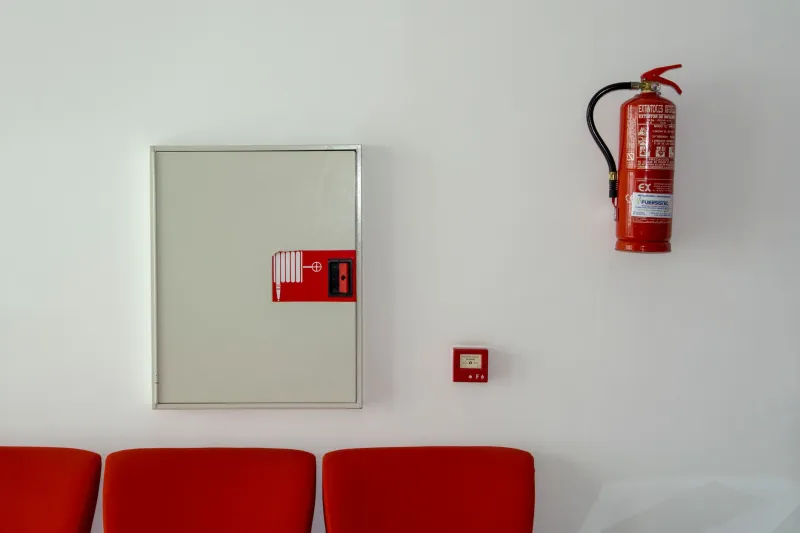
Paper Compliance, Real Danger: How Britain's Tick-Box Fire Risk Culture Is Leaving Workers Unprotected
There is a document sitting in a lever-arch folder in tens of thousands of UK workplaces right now. It was produced in under ten minutes, signed by someone with no formal fire safety training, and based on a template downloaded free from a government website or a quick internet search. It states, with bureaucratic confidence, that the premises have been assessed, that risks have been identified, and that appropriate measures are in place. It will satisfy a routine audit. It will not, in any meaningful sense, protect the people who work in that building.
This is the reality of fire risk assessment culture in modern British business — and it represents one of the most underreported and systematically misunderstood safety failures operating across the UK economy today.
What the Law Actually Requires
The Regulatory Reform (Fire Safety) Order 2005 (the FSO) places a clear duty on the 'responsible person' — typically an employer or building owner — to carry out a suitable and sufficient fire risk assessment and implement appropriate fire safety measures. The legislation does not merely require a document. It requires a genuine, competent evaluation of fire hazards, the people at risk, and the adequacy of existing protective measures.
The phrase 'suitable and sufficient' carries significant legal weight. Courts and tribunals have interpreted it consistently: an assessment must reflect the actual conditions of the specific premises, account for the specific activities conducted there, and be carried out by someone with the knowledge and experience to make informed professional judgements. A downloaded template, completed without site-specific consideration, does not meet this standard — regardless of how neatly it has been filed.
The Fire Safety Act 2021 strengthened these obligations further, particularly in relation to multi-occupied residential buildings, and the Building Safety Act 2022 introduced the concept of the 'accountable person' with explicit duties around fire and structural safety. Across all of this legislation, the direction is consistent: the standard of competence expected of those conducting fire risk assessments is rising, not falling.
The Prosecution Record Tells a Clear Story
Enforcement data from the National Fire Chiefs Council and published prosecution records from fire and rescue services across England and Wales reveal a consistent pattern. Businesses prosecuted following fire-related incidents or enforcement inspections frequently cite the existence of a fire risk assessment as evidence of compliance. Prosecutors and courts routinely find those assessments to be inadequate — not because they were absent, but because they were superficial.
In one illustrative case heard by a Crown Court in the Midlands, a hospitality business produced a fire risk assessment completed by its general manager using an online template. The assessment had not identified inadequate compartmentation between the kitchen and dining areas, had not accounted for a recently installed extraction system that altered fire spread risk, and had not been reviewed following a change in the building's occupancy levels. The business was convicted under the FSO and faced substantial fines. The assessment, which had satisfied internal audits for two years, was described by the judge as 'a document that created the appearance of safety without any of its substance.'
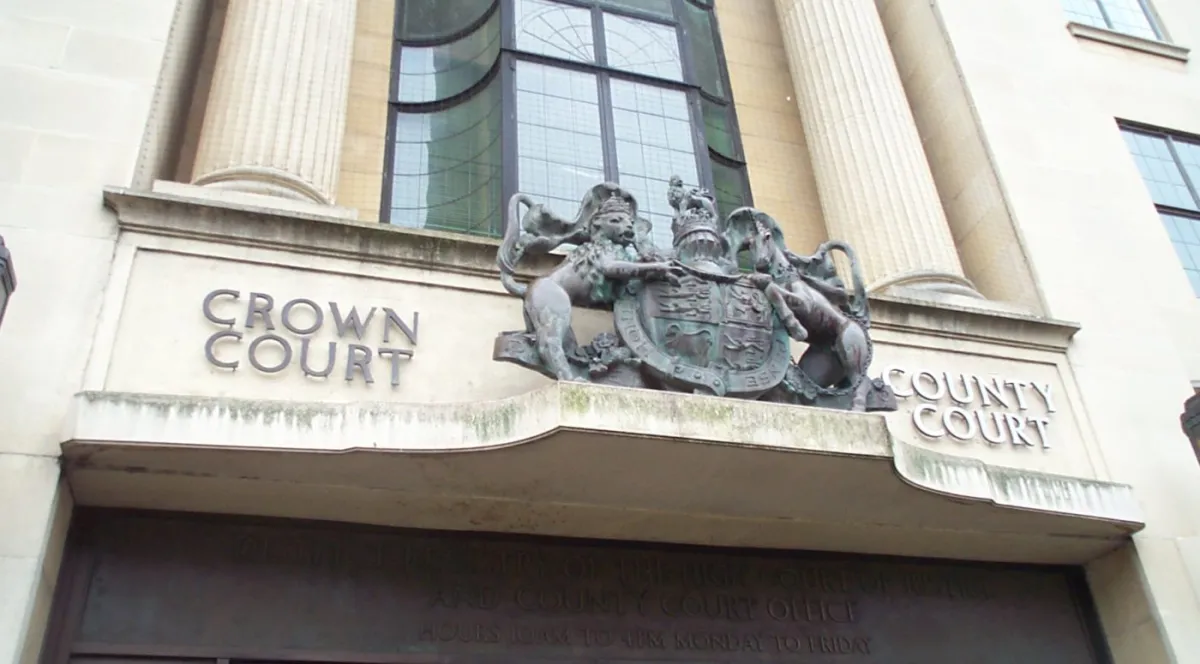 Photo: Crown Court in the Midlands, via www.stuartmillersolicitors.co.uk
This pattern — documentation that satisfies process whilst failing substance — is not exceptional. It is, according to fire safety professionals and enforcement officers, remarkably common.
Why the Tick-Box Culture Persists
Understanding why inadequate fire risk assessments have become so normalised requires examining the incentive structures that sustain them. For many small and medium-sized enterprises, the primary driver of safety documentation is not genuine risk reduction but audit readiness. When the auditor — whether internal, from an insurer, or from a contracting client — asks to see a fire risk assessment, the organisation needs to produce one. The auditor's checklist confirms that a document exists and that it covers the required headings. The depth of the underlying analysis is rarely scrutinised.
This creates a market for compliance theatre. Businesses that invest in genuinely competent fire risk assessments — conducted by qualified professionals, tailored to the specific premises, and reviewed at appropriate intervals — face a cost that their competitors, producing superficial documentation in-house, do not. In a procurement environment where cost drives decisions, the incentive to cut corners is structural rather than merely attitudinal.
The proliferation of free and low-cost template resources online has compounded the problem. These resources are not inherently harmful — they can provide useful frameworks for competent assessors — but in the hands of untrained individuals, they produce documents that mimic the format of a genuine assessment without replicating its analytical content.
What a Genuine Assessment Looks Like
A fire risk assessment that meets the 'suitable and sufficient' standard is not a form. It is a professional exercise conducted by someone with demonstrable competence — ideally a member of a recognised body such as the Institution of Fire Engineers or the Institute of Fire Safety Managers, or someone who can evidence equivalent training and experience.
 Photo: Institution of Fire Engineers, via backoffice.firearson.com
It involves a physical walkthrough of the premises, during which the assessor examines ignition sources, fuel loads, and oxygen sources; evaluates the adequacy of detection and warning systems; assesses means of escape in relation to the specific occupancy; considers the needs of vulnerable persons; and reviews the maintenance records of fire safety equipment. The resulting document records findings, prioritises actions, and sets a review date that reflects the rate of change in the premises.
Critically, it is a living document. A fire risk assessment completed three years ago, never reviewed despite a change of use, a refurbishment, or an increase in occupancy, is not a compliant document — it is a historical record with no current legal validity.
The Professional and Moral Imperative
The argument for genuine fire risk assessment is not primarily regulatory. It is moral. Fire remains one of the leading causes of workplace fatality and serious injury in the United Kingdom. The Grenfell Tower fire — and the years of inquiry and legislative reform that followed — demonstrated with devastating clarity what happens when documentation is treated as a proxy for safety rather than as a record of it.
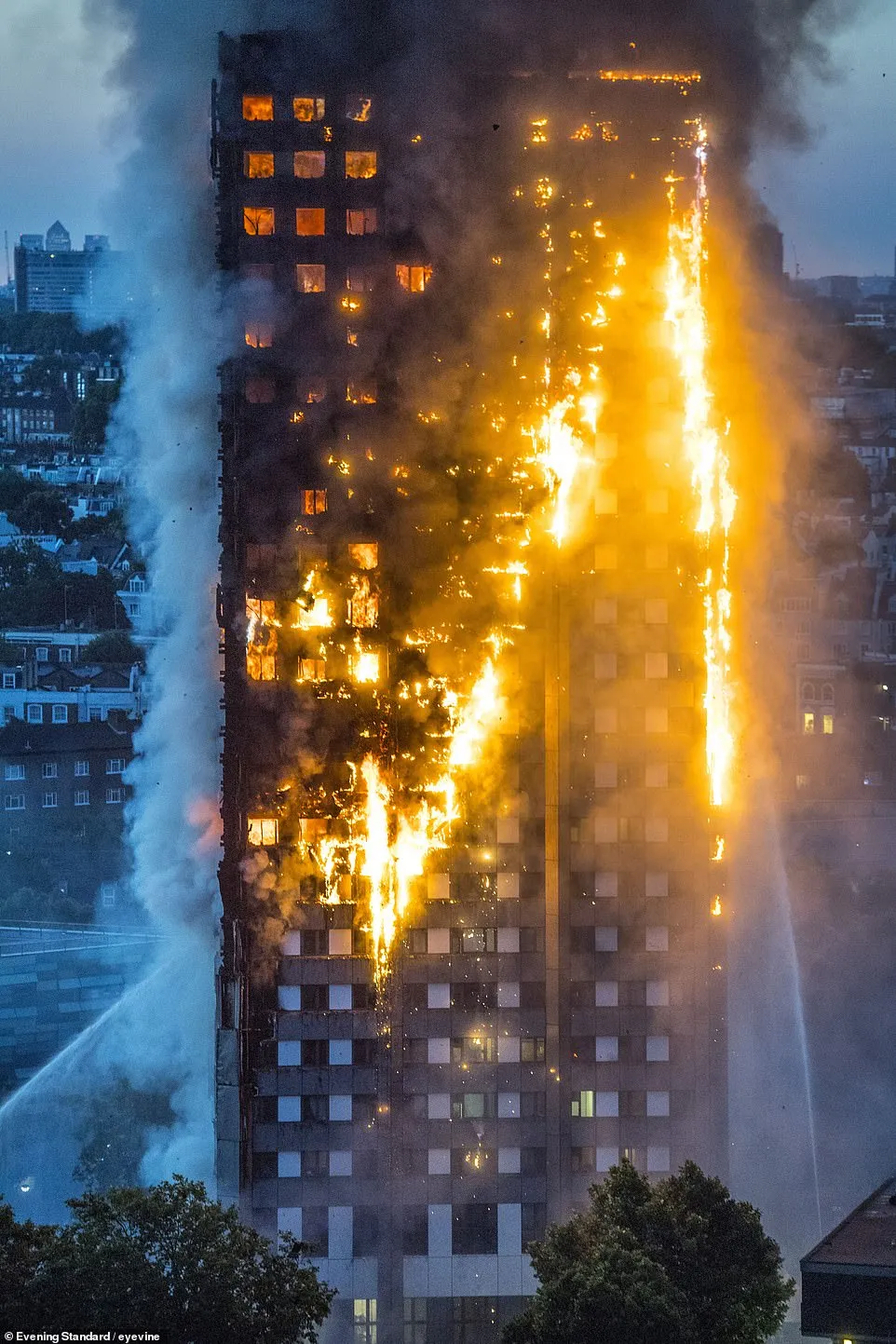 Photo: Grenfell Tower, via i.dailymail.co.uk
Businesses that commission superficial fire risk assessments are not merely exposing themselves to prosecution. They are making a decision — consciously or otherwise — that the time and cost of genuine compliance is not worth the protection of the people in their buildings. That is a decision that, in the event of a fire, they will not be able to justify to a court, to a coroner, or to themselves.
The tick-box culture that has taken root in British workplace fire safety is not inevitable. It is a choice — and it is one that professional inspection, genuine competence, and robust enforcement exist to reverse.