No Exemption, No Excuses: The Dangerous Myth That Small UK Businesses Fall Outside Safety Law

Ask a representative sample of UK small business owners whether health and safety law applies to them, and a striking number will express some version of the same belief: that there is a threshold — a headcount, a turnover figure, an industry classification — beneath which formal compliance requirements do not bite. Some will cite five employees as the magic number. Others will point to their sector, their premises type, or the fact that they have "never had a problem."
None of these beliefs reflect the law as it stands. And the consequences of acting on them can be severe.
What the Law Actually Says
The Health and Safety at Work etc. Act 1974 is the foundational piece of legislation governing workplace safety in the United Kingdom. Its scope is broad by design. Section 2(1) imposes a general duty on every employer to ensure, so far as is reasonably practicable, the health, safety and welfare at work of all employees. There is no qualifying clause that limits this duty to businesses above a certain size.
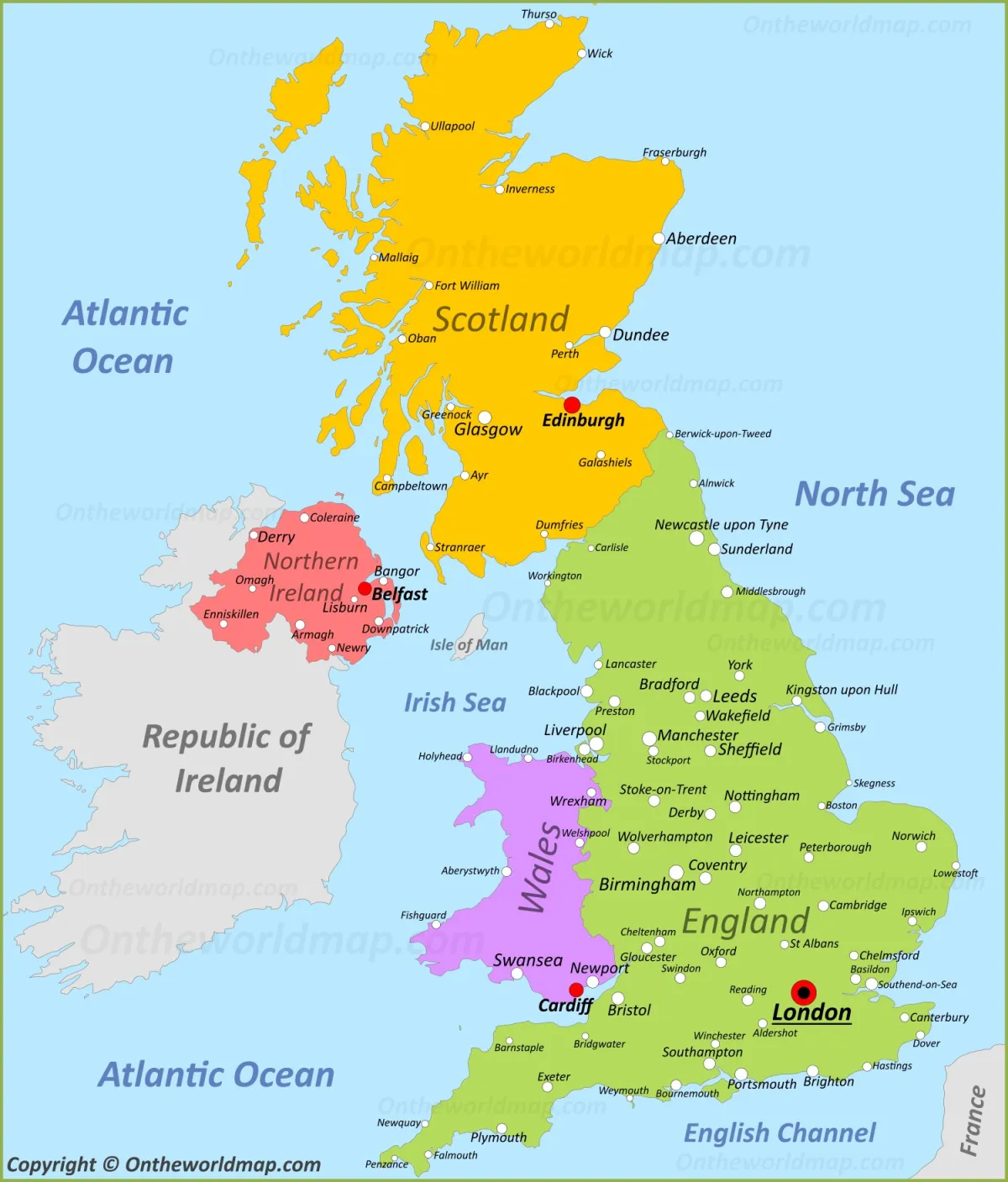 Photo: United Kingdom, via ontheworldmap.com
Section 3 extends the obligation further, requiring employers and the self-employed to conduct their undertakings in such a way that persons not in their employment — members of the public, visitors, contractors, delivery personnel — are not exposed to risks to their health or safety.
The only significant concession to business size within the Act is the requirement under Section 2(3) to produce a written safety policy, which applies only where five or more employees are engaged. This single administrative distinction has, over decades, been misread by many small employers as a broader exemption from safety obligations. It is not. An employer with four staff, two staff, or no staff beyond themselves still bears substantive duties under the Act.
The Management of Health and Safety at Work Regulations 1999 further require all employers — again, regardless of size — to make a suitable and sufficient assessment of the risks to which their employees and others may be exposed. For businesses with fewer than five employees, this assessment need not be written down, but it must be made and acted upon.
The Enforcement Reality
For much of the past two decades, small businesses operated in an environment where the probability of an HSE inspection was relatively low. Enforcement resources were concentrated on higher-risk industries and larger operations, and many micro-employers developed a justified sense that they were unlikely to receive a visit.
That calculus has shifted. The HSE's operational strategy has increasingly incorporated intelligence-led targeting, responding to complaints, referrals, and incident reports rather than relying solely on scheduled inspection programmes. Local authority environmental health departments — which hold enforcement responsibility for lower-risk premises such as offices, shops, and hospitality venues — have similarly sharpened their focus on small operators following high-profile incidents involving businesses that had no meaningful safety arrangements in place.
Critically, an HSE investigation does not require a prior inspection. An accident, a complaint from a worker or member of the public, or a referral from another agency can trigger a full investigation of a business with a single employee. The absence of previous regulatory contact provides no protection.
Real Consequences for Small Operators
The prosecution record makes uncomfortable reading for those who believe small businesses occupy a regulatory blind spot.
Sole traders have faced prosecution and conviction under the Health and Safety at Work Act following workplace accidents. The courts have imposed custodial sentences, substantial fines, and director disqualification orders on individuals running operations with minimal staff. The Corporate Manslaughter and Corporate Homicide Act 2007, while primarily associated with larger organisations, can in principle apply to any incorporated entity regardless of size.
In one instructive category of cases, small construction contractors — operating with two or three workers on domestic or small commercial sites — have faced prosecution following falls from height, incidents that larger firms might have avoided through more structured safety arrangements. The defence that the business was too small to be expected to have formal procedures has not been accepted by the courts.
Penalties for small businesses can be existential. A fine calibrated to the financial resources of the defendant may represent a modest sum for a large corporation but can bankrupt a sole trader or small partnership. Legal costs, compensation claims, and the reputational damage of a conviction compound the financial impact.
The Proportionality Principle: Misunderstood and Misapplied
One reason the exemption myth persists is a genuine — if incorrect — understanding of the concept of reasonable practicability. Because the Act requires duties to be discharged "so far as is reasonably practicable," many small employers conclude that their limited resources effectively excuse them from significant compliance effort.
The principle operates differently in practice. Reasonable practicability requires a proportionate response to risk, not an absence of response. A sole trader running a small electrical contracting business is not expected to maintain the same documentation architecture as a national facilities management company. They are, however, expected to identify the principal risks associated with their work, take practical steps to control those risks, and be able to demonstrate that they have done so.
The HSE's own guidance for small businesses is explicit on this point. It emphasises that effective safety management does not require expensive consultants, elaborate paperwork, or sophisticated management systems. It does require genuine engagement with the question of what could cause harm and what has been done about it.
Why Small Businesses Are Increasingly in the Crosshairs
Several converging trends are directing enforcement attention towards smaller operators. Worker awareness of safety rights has increased, particularly among younger employees and those engaged through digital platforms. The ease with which complaints can be submitted to the HSE online has lowered the threshold for reporting. Trade unions, where present in small workplaces, have become more assertive in pursuing safety concerns through official channels.
Insurance underwriters are also playing a role. Employers' liability insurers, in particular, are conducting more rigorous assessments of small business clients' safety arrangements, and incidents that trigger insurance claims frequently generate notifications to enforcement bodies.
Getting Ahead of the Risk
For small business owners who have operated on the assumption that safety compliance is someone else's concern, the starting point is not alarm but action. The HSE provides freely accessible guidance tailored to small employers across a wide range of sectors. For businesses in higher-risk industries — construction, manufacturing, food processing, agriculture — professional support from a competent safety adviser is a sound investment.
At National Safety Inspections, we work with small and micro-businesses across the UK to establish proportionate, practical compliance frameworks that reflect the actual risks of their operations. The goal is not bureaucratic box-ticking but genuine risk management — and the protection that comes with it.
The regulatory radar is not blind to small businesses. It never was. The only question is whether a business is prepared when it comes into focus.