The Occupancy Paradox: Why Half-Empty Buildings Are Becoming a Legionella Liability
The quiet risk in an underused building
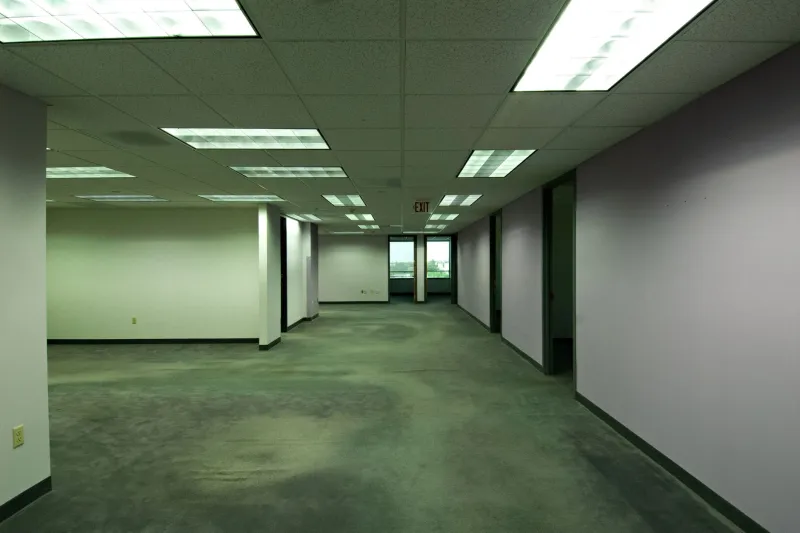
A half-empty office can feel like a lower-risk workplace. Fewer people, fewer accidents, fewer complaints. For water systems, the opposite is often true. When taps are used intermittently, showers stand idle and little-used wings are closed off, water sits in pipes for longer. That stagnation, combined with lukewarm temperatures and biofilm formation, creates favourable conditions for Legionella bacteria. The risk does not disappear because the desks are empty. It simply moves into the parts of the building that no one is watching.
The shift towards hybrid working has been uneven. Some organisations operate at sixty per cent occupancy on a good week; others have mothballed entire floors while retaining a skeleton staff. Phased closures and slow lettings add another layer. A landlord may keep common facilities live for a handful of tenants while upper floors remain vacant for months. Each of these patterns changes the water usage profile that the original risk assessment assumed.
Why reduced occupancy changes the duty
Legionella management is not a one-off inspection. It is a continuing process of identifying foreseeable exposure and putting controls in place. Under the Health and Safety at Work etc. Act 1974 and the Control of Substances Hazardous to Health Regulations 2002, duty holders must assess and manage the risk from hazardous substances, including biological agents. The Approved Code of Practice L8 and HSG274 set out the practical framework: a named responsible person, a suitable and sufficient risk assessment, a written scheme for controlling risk, and records that demonstrate the scheme is working.
Reduced occupancy undermines several assumptions in a generic scheme. A regime designed for full-time use may specify weekly flushing of little-used outlets. If occupancy falls to two days a week, those outlets may be used even less than the scheme assumed. Dead legs left behind by fit-out changes become more significant. Temperature monitoring at sentinel outlets may be carried out, but the results are harder to interpret when the system is not being drawn through in the same way. Cold water that should remain below twenty degrees Celsius can drift upwards in warm, underused risers. Hot water that should be stored and distributed above sixty degrees Celsius may not reach distant outlets quickly enough.
The responsible person remains responsible. Outsourcing the task to a water treatment contractor does not transfer the legal duty. A contractor can sample, test and advise, but the duty holder must ensure the assessment is site-specific, the scheme is followed and the records are reviewed. In practice, the weakest link is often the handover between landlord and tenant.
The flushing gap between landlord and tenant
In multi-let commercial buildings, responsibility is frequently split. The landlord may control common parts, plant rooms and shared washing facilities. The tenant may control the demised area. The lease may allocate maintenance obligations, but it rarely describes flushing in operational terms. Who flushes the kitchen tap in a vacant suite? Who checks the shower in a tenant amenity block that is used by three companies on different days? Who records the result when a managing agent arranges a contractor visit?
These questions become sharper when a building is partially vacant. A landlord may keep water systems live to preserve the building for future letting, while tenants reduce their own use. The result can be a patchwork of responsibility with no single occupancy profile. Generic annual risk assessments often miss this because they are written around the building as it was originally occupied, not as it is being used today.
A defensible approach treats the lease and the facilities management contract as part of the evidence trail. Flushing duties should be named, scheduled and recorded, not left to informal arrangements between site teams. Where a tenant is responsible for its own area, the landlord still needs assurance that the tenant is meeting its obligations, particularly where common systems or shared risers are involved.
What a defensible monitoring regime looks like in 2026
A credible regime starts with an occupancy profile. The responsible person should know which outlets are used daily, which are used weekly and which are effectively dormant. The water safety risk assessment should reflect that pattern, including any phased closures, seasonal variation or planned refurbishment. Schematics should be updated when fit-outs create or remove pipework. Dead legs should be removed where practicable rather than flushed indefinitely.
Monitoring should be risk-based and recorded. Temperature checks at sentinel outlets, flushing logs and contractor reports are only useful if they are reviewed by someone with authority to act. Digital logs with time stamps can help, but they do not replace judgement. A flushed outlet with no recorded temperature, no named operative and no escalation route is a paper exercise.
Finally, the regime should include a trigger for change. A fall in occupancy, a new tenant, a floor closure or a slow letting period should prompt a review of the water safety scheme. The question is not whether the building is busy. It is whether the water system is being used in the way the assessment assumed. In 2026, that distinction is central to a compliant and defensible Legionella strategy.