After Midnight, After Oversight: The Compliance Void Inside Britain's Night-Time Workplaces
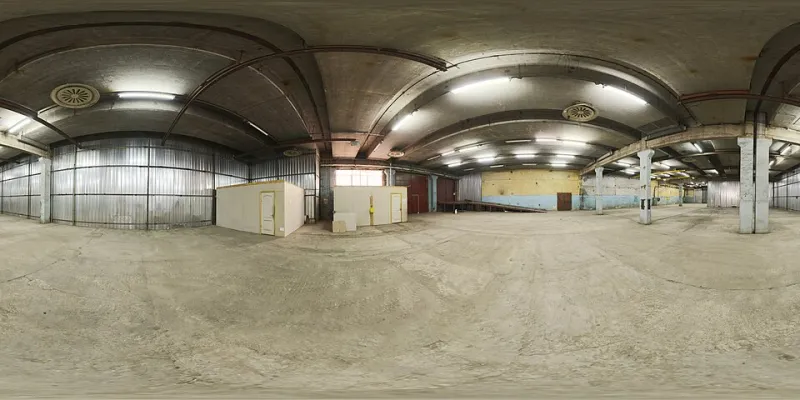
Photo: Sergej Majboroda, CC0, via Wikimedia Commons
At 2:40am on a Tuesday, a warehouse operative in the Midlands slips on a wet loading bay floor and fractures their wrist. There is no duty manager on site. The designated first aider finished their shift nine hours earlier. The accident book is locked in an office nobody can access. By the time the HSE begins asking questions, the employer cannot produce a single record showing who was responsible for safety during the hours the incident occurred.
This scenario is not hypothetical. It is the operational reality inside thousands of UK workplaces — hospitals, distribution centres, factories, hotels and offices — where the working day technically ends but the legal duty of care does not.
The Law Does Not Recognise a Closing Time
The Health and Safety at Work etc. Act 1974 applies to employers at all times their undertaking operates, not merely during core business hours. Regulation 3 of the Management of Health and Safety at Work Regulations 1999 requires suitable and sufficient risk assessments for every activity — including those performed at 3am by a lone operative with a radio handset and a prayer.
Yet in practice, night operations are frequently treated as a scaled-down version of the day shift: fewer people, fewer risks, fewer resources. This reasoning collapses under scrutiny. Night work introduces hazards that simply do not exist at midday — fatigue-degraded decision-making, reduced emergency service familiarity with the site, thinner supervision, and the psychological pressures of isolation.
Case history bears this out. Enforcement notices and prosecutions following night-time incidents have repeatedly highlighted the same failures: no competent person reachable on site, first aid provision that existed in name only, and emergency arrangements written for a daytime workforce that had long since gone home.
The Three Gaps That Sink Employers
From an inspection standpoint, out-of-hours failures cluster around three predictable gaps.
The supervision gap. A duty manager or nominated competent person must be identifiable for every hour the site operates. If your night team cannot name that person, you do not have supervision — you have occupancy.
The first aid gap. The Health and Safety (First-Aid) Regulations 1981 require cover whenever employees are at work. A first aider on the 7am to 3pm shift provides no cover at 11pm. Lone worker provisions, trauma kits and clear escalation routes must exist independently of the day team.
The record-keeping gap. Night-shift incidents, near misses and equipment faults routinely go unlogged because the reporting systems are inaccessible or the culture treats out-of-hours issues as tomorrow's problem. When the regulator arrives, the absence of records is treated as evidence of the absence of management.
Auditing Your After-Hours Operation
A practical framework for duty holders:
- Map every operating hour. Identify precisely who is on site, in what role, with what competence, at every hour of the week. Include cleaning contractors, security and agency staff.
- Test the escalation chain. Ring the emergency contact number at 3am on a random night. Time the response. A framework that works on paper at 2pm and fails at 2am is not a framework.
- Verify lone-worker arrangements. Check devices, check-in intervals and the procedure when a check-in is missed. Written policies without live testing are decoration.
- Audit night-specific risk assessments. Fatigue, lighting levels, access for emergency vehicles and reduced staffing during evacuations should all feature. If they do not, the assessment is incomplete.
- Inspect the record trail. Night-shift accident books, defect reports and near-miss logs should show activity proportional to the hours worked. Silence is a red flag, not reassurance.
Reduced Hours, Not Reduced Risk
The most dangerous assumption in out-of-hours operations is that fewer people means less exposure. In reality, it often means fewer people to notice a hazard, fewer people to respond to an incident, and fewer people to demonstrate — after the fact — that the organisation took its duties seriously.
Regulators increasingly scrutinise night operations with the same rigour as daytime ones. Businesses should ensure their safety systems are equally indifferent to the clock.