Robotic Revolution Safety Crisis: UK Workplaces Racing Ahead of Compliance as Automation Outpaces Inspection Standards
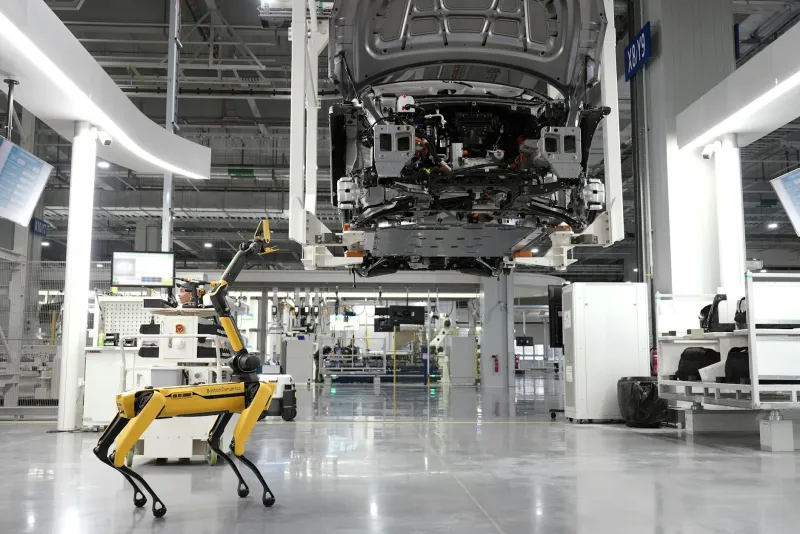
Across Britain's industrial landscape, a quiet revolution is transforming how work gets done. Robotic assembly lines operate alongside human workers, AI systems make split-second operational decisions, and automated machinery performs tasks that once required constant human oversight. Yet whilst technology races forward at breakneck speed, the safety frameworks designed to protect workers are struggling to keep pace with risks that didn't exist when current regulations were written.
The Compliance Time Lag
The Health and Safety Executive's guidance documents, which form the backbone of UK workplace safety compliance, were largely developed for traditional industrial environments where human workers operated mechanical equipment under direct supervision. Today's automated workplaces present fundamentally different risk profiles that challenge these established frameworks.
Consider the pharmaceutical packaging facility in Hertfordshire where collaborative robots work directly alongside human operators, sharing workspace and tools throughout their shifts. The facility's safety inspection checklist, based on HSE guidance from 2018, includes detailed requirements for machine guarding and emergency stops but provides no framework for assessing the risks created when humans and robots share the same operational envelope.
When HSE inspectors visited the facility last year, they found themselves applying traditional machinery safety standards to sophisticated AI-driven systems that could modify their behaviour based on production demands. The resulting compliance assessment missed critical safety gaps that emerged only when the robots' learning algorithms began optimising their movements in ways that increased collision risks with human workers.
Human-Machine Interface: The New Frontier
Traditional workplace safety operated on clear boundaries: humans controlled machines, machines performed predictable actions, and safety systems could be designed around consistent operational patterns. Modern automated systems blur these boundaries in ways that create entirely new categories of risk.
Collaborative robots, or "cobots," are designed to work directly alongside humans without traditional safety barriers. Their sophisticated sensors and AI-driven control systems allow them to detect human presence and modify their behaviour accordingly. Yet current safety inspection protocols provide no standardised methodology for assessing whether these detection systems function reliably across the full range of operational scenarios.
A recent incident at a Midlands automotive component manufacturer illustrates the complexity. A collaborative robot, programmed to assist with heavy lifting tasks, failed to detect a worker who had crouched beneath its operational range to retrieve a dropped tool. The robot's sensors, calibrated for standing human figures, continued normal operations whilst the worker remained in a dangerous position. Traditional safety inspections would have identified inadequate machine guarding, but the incident occurred within a system specifically designed to operate without physical barriers.
Software-Triggered Hazards
Perhaps the most challenging aspect of automated workplace safety involves hazards triggered by software malfunctions or unexpected AI behaviour. Unlike mechanical failures, which typically follow predictable patterns and can be prevented through regular maintenance, software-related safety incidents can emerge from complex interactions between multiple systems that may not become apparent until specific operational conditions align.
Manufacturing execution systems now control everything from conveyor speeds to environmental controls, making real-time adjustments based on production demands and efficiency algorithms. When these systems malfunction or receive corrupted data, they can create hazardous conditions that develop too rapidly for human intervention.
A food processing facility in Scotland experienced this firsthand when a software update to their automated packaging line caused the system to dramatically increase conveyor speeds during shift changes. The faster speeds created dangerous conditions for workers performing routine maintenance tasks, but the hazard was only discovered after several near-miss incidents. Standard safety inspections focus on mechanical components and documented procedures, providing no framework for assessing software reliability or the safety implications of algorithmic decision-making.
The Regulatory Grey Zone
Current HSE guidance acknowledges the growing presence of automated systems in UK workplaces but provides limited specific direction for assessing their safety implications. The Provision and Use of Work Equipment Regulations 1998 (PUWER) requires that work equipment be suitable for its intended use and properly maintained, but these broad requirements offer little practical guidance for evaluating AI-driven systems that continuously modify their own behaviour.
This regulatory ambiguity creates a dangerous compliance gap. Businesses implementing automated systems often assume that meeting traditional safety standards provides adequate protection, whilst safety inspectors struggle to apply established assessment criteria to technologies that operate fundamentally differently from conventional machinery.
The result is a workplace safety landscape where some of the most advanced and potentially hazardous systems receive the least rigorous safety oversight. Companies invest millions in sophisticated automation whilst relying on inspection protocols designed for mechanical systems from previous decades.
Emerging Risk Categories
Automated workplace systems introduce several categories of risk that traditional safety frameworks struggle to address:
Algorithmic Unpredictability: AI systems that modify their behaviour based on operational data can develop unsafe operating patterns that emerge gradually and may not be immediately apparent to human supervisors.
Integration Failures: Complex automated systems often involve multiple vendors and software platforms that may not integrate seamlessly, creating safety vulnerabilities at the interfaces between different systems.
Cybersecurity Vulnerabilities: Connected automated systems can be compromised by cyber attacks that deliberately or accidentally create unsafe operating conditions.
Human Skill Degradation: Workers who rely heavily on automated systems may lose the manual skills and situational awareness needed to respond effectively when automation fails.
The Inspection Innovation Imperative
Addressing these challenges requires fundamental changes to how workplace safety inspections are conducted. Traditional approaches that focus on physical hazards and documented procedures must expand to encompass software reliability, algorithmic behaviour, and human-machine interaction patterns.
Progressive safety inspection services are beginning to develop new methodologies that include software auditing, AI behaviour analysis, and scenario-based testing of automated systems under various failure conditions. These approaches require inspectors with technical expertise that extends far beyond traditional mechanical and electrical knowledge.
Industry-Specific Challenges
Different sectors face unique automation-related safety challenges that require tailored inspection approaches:
Manufacturing: Collaborative robots and AI-driven quality control systems create new human-machine interaction risks that traditional guarding strategies cannot address.
Logistics: Automated guided vehicles and robotic sorting systems operate in shared spaces with human workers, requiring dynamic safety protocols that adapt to changing operational patterns.
Healthcare: Robotic surgical systems and AI-driven patient monitoring create life-critical automation dependencies that demand rigorous reliability assessment.
Construction: Autonomous construction equipment and AI-driven project management systems introduce coordination challenges that traditional site safety protocols cannot adequately manage.
The Path Forward
UK businesses deploying automated systems cannot wait for regulatory frameworks to catch up with technological advancement. The responsibility for ensuring safe human-machine interaction rests with employers, who must go beyond minimum compliance requirements to develop comprehensive safety protocols for their specific automated systems.
This requires a proactive approach that includes regular software auditing, scenario-based testing of failure modes, comprehensive training for workers who interact with automated systems, and ongoing monitoring of human-machine interaction patterns to identify emerging risks.
The companies that recognise automation safety as a distinct discipline requiring specialist expertise will gain competitive advantages through reduced incident rates, improved regulatory relationships, and enhanced operational reliability. Those that attempt to apply traditional safety approaches to revolutionary technology will find themselves exposed to unprecedented risks that existing compliance frameworks cannot adequately address.
The robotic revolution is transforming UK workplaces whether safety systems keep pace or not. The question is whether British businesses will lead in developing the new safety standards their automated futures require, or whether they will learn about these risks through incidents that could have been prevented with more thoughtful preparation.