Britain's Phantom Properties: The Enforcement Crisis Brewing in Legally Occupied but Physically Abandoned Commercial Buildings

The Silent Epidemic Across Britain's Commercial Landscape
A new category of property risk is emerging across Britain's commercial estates, creating unprecedented challenges for enforcement agencies and property owners alike. These "phantom properties" appear occupied on legal documents whilst remaining effectively abandoned in practice, creating dangerous compliance voids that threaten public safety and expose property stakeholders to criminal liability.
The phenomenon has accelerated dramatically since 2020, driven by business failures, remote working adoption, and economic uncertainty. Retail units signed to tenants who never opened, office spaces leased to companies that immediately shifted to home working, and commercial premises occupied sporadically by struggling businesses—all represent variations of this growing problem.
What makes these properties particularly dangerous is the widespread assumption that tenancy agreements automatically transfer safety compliance obligations to absent tenants. This assumption is proving catastrophically wrong as enforcement agencies begin systematic investigations into unmaintained commercial buildings.
The Legal Reality: Obligations That Never Transfer
Contrary to popular belief among property owners, many critical safety obligations cannot be discharged simply by signing tenancy agreements. The Regulatory Reform (Fire Safety) Order 2005 imposes duties on "responsible persons" that may include property owners regardless of tenancy arrangements, particularly where common areas or building-wide systems are involved.
Gas Safety (Installation and Use) Regulations require annual safety checks for commercial gas appliances, with obligations that often rest with property owners even when tenants have operational control. When tenants are absent or unresponsive, these checks simply do not occur, creating immediate regulatory violations that compound annually.
Electrical safety obligations present similar challenges. The Electricity at Work Regulations 1989 require maintenance of electrical installations to prevent danger, with duties that cannot be delegated away through tenancy agreements. Properties with absent tenants may go years without electrical inspection, creating fire and electrocution risks that extend beyond the immediate premises.
The Legionella Time Bomb
Perhaps no risk illustrates the phantom property crisis more clearly than legionella bacteria proliferation in unmaintained water systems. The Health and Safety at Work Act 1974 and associated guidance require regular monitoring and maintenance of water systems that can harbour legionella bacteria, with obligations that persist regardless of property occupation levels.
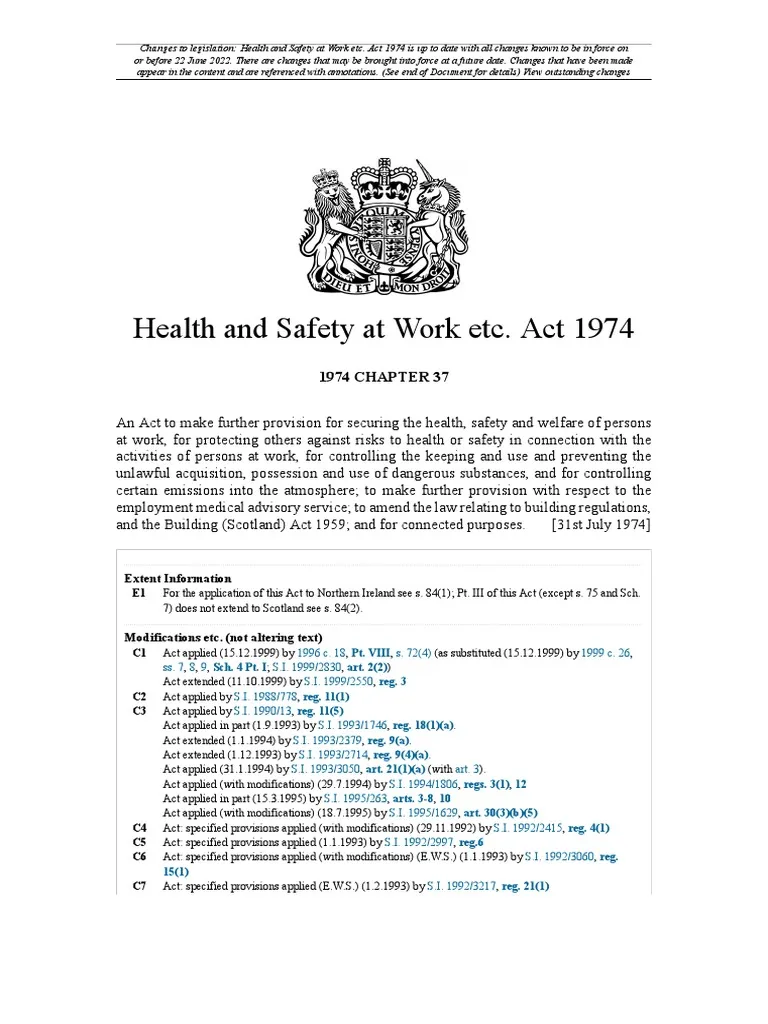 Photo: Health and Safety at Work Act 1974, via imgv2-1-f.scribdassets.com
Commercial properties with absent tenants often maintain water supplies for fire suppression systems, emergency facilities, or periodic tenant access. These systems can become legionella breeding grounds within months of abandonment, creating public health risks that extend well beyond property boundaries.
Recent investigations by environmental health officers have identified widespread legionella contamination in apparently occupied commercial buildings. Property owners facing prosecution often express genuine shock at discovering their ongoing legal obligations, having assumed that signed tenancy agreements transferred all water safety responsibilities.
Fire Safety: The Invisible Deterioration
Fire safety systems require regular testing and maintenance that becomes impossible when responsible tenants are absent. Emergency lighting systems must be tested monthly under most circumstances, fire alarm systems require regular inspection, and fire extinguishers need annual servicing—all obligations that continue regardless of actual building occupation.
The deterioration often occurs gradually and invisibly. Battery-powered emergency lighting fails silently, fire detection systems accumulate dust and malfunction, and escape routes become obstructed by abandoned fixtures or equipment. By the time problems are discovered, buildings may have operated for months or years in dangerous non-compliance.
Fire and rescue services conducting routine inspections increasingly encounter properties where responsible persons cannot be identified or contacted. These situations trigger formal enforcement procedures that often reveal systematic compliance failures extending back to the beginning of phantom occupation periods.
The Enforcement Response: Systematic Investigation
Local authorities and the Health and Safety Executive are developing new approaches to identify and address phantom property risks. These investigations often begin with routine inspections that reveal absent tenants and unmaintained safety systems, triggering comprehensive compliance audits that can uncover years of regulatory violations.
Enforcement agencies are rejecting property owner arguments that tenancy agreements transfer legal responsibilities. Instead, they are applying strict liability principles that hold property owners accountable for safety failures regardless of contractual arrangements with absent tenants.
Prohibition notices are becoming common enforcement tools for phantom properties, effectively closing buildings until comprehensive safety remediation is completed. These notices can remain in force for months, preventing any commercial use whilst property owners arrange expensive emergency repairs and safety system upgrades.
The Insurance Implications: Coverage Voids
Insurance policies for commercial properties typically assume active occupation and regular maintenance. When properties become phantom occupied, policy conditions may be breached without property owners' knowledge, creating coverage gaps that emerge only when claims are made.
Insurers are increasingly investigating the circumstances of commercial property claims, looking for evidence of maintenance failures or occupation irregularities that could void coverage. Property owners may discover that years of premium payments provide no protection when phantom occupation has undermined policy conditions.
This insurance uncertainty compounds the regulatory risks, leaving property owners potentially liable for both criminal penalties and uninsured losses when safety incidents occur in unmaintained phantom properties.
Building Effective Management Systems
Addressing phantom property risks requires active management systems that can identify absent tenants and maintain safety compliance regardless of occupation levels. Property owners must implement regular inspection schedules that do not rely on tenant cooperation or presence.
Effective systems include remote monitoring of critical safety equipment, regular physical inspections by qualified professionals, and clear contractual mechanisms for accessing properties when tenants are unresponsive. These systems must be designed to maintain full regulatory compliance even when tenants provide no cooperation.
Documentation becomes critical, as enforcement agencies will scrutinise evidence of ongoing compliance efforts. Property owners must maintain detailed records of inspection attempts, safety system testing, and remedial actions taken regardless of tenant presence or cooperation.
The Commercial Reality: Costs and Consequences
The true cost of phantom property management often exceeds rental income, particularly when comprehensive safety maintenance is required for rarely occupied buildings. Property owners face difficult decisions about whether to maintain expensive compliance regimes for properties generating minimal revenue.
However, the alternative—allowing phantom properties to deteriorate into non-compliance—carries criminal liability risks that can include substantial fines and imprisonment for company directors. Recent prosecutions demonstrate that enforcement agencies will pursue property owners regardless of their financial relationship with absent tenants.
Looking Forward: Industry and Regulatory Response
The phantom property crisis requires new approaches to commercial property management and regulation. Industry bodies are developing guidance on managing absent tenant situations, whilst enforcement agencies are refining their approaches to properties that exist in legal occupation limbo.
Property owners must recognise that the traditional model of transferring all safety obligations to tenants through lease agreements no longer provides reliable protection. Instead, they must implement active management systems that can maintain regulatory compliance regardless of tenant behaviour or presence.
The stakes are too high for passive management approaches. As enforcement agencies intensify their focus on phantom properties, property owners face a choice between proactive compliance management and reactive criminal prosecution—a choice that recent enforcement trends suggest is becoming increasingly stark.