Britain's Young Worker Safety Crisis: How Age-Blind Induction Protocols Are Failing a Generation

The Statistical Reality Behind Britain's Youth Safety Crisis
Buried within the Health and Safety Executive's annual injury statistics lies a troubling pattern that most UK employers have yet to acknowledge. Workers aged 16-24 account for approximately 12% of the British workforce, yet represent nearly 20% of all reported workplace injuries requiring medical treatment. This disproportionate representation becomes even more stark when examining serious incidents: young workers are 40% more likely to suffer injuries requiring hospitalisation than their older colleagues.
 Photo: Health and Safety Executive, via www.rockallsafety.co.uk
These figures represent more than statistical curiosities. They expose a fundamental flaw in how British businesses approach workplace safety induction for their youngest and most vulnerable employees. The assumption that safety training can follow a one-size-fits-all model regardless of worker age, experience, or developmental stage has created a systemic failure that places both young workers and their employers at unnecessary risk.
The Neuroscience of Risk Perception
Recent advances in neuroscience provide crucial context for understanding why young workers face elevated safety risks. The human brain's prefrontal cortex, responsible for risk assessment and impulse control, continues developing until approximately age 25. This biological reality means that young workers literally process risk information differently than their older colleagues.
Young workers often exhibit optimism bias, underestimating their personal vulnerability to workplace hazards whilst simultaneously overestimating their ability to avoid dangerous situations. This cognitive pattern, combined with inexperience in recognising workplace hazards, creates a perfect storm for preventable injuries.
Yet British employers overwhelmingly ignore these developmental factors when designing safety induction programmes. Standard safety briefings that rely heavily on written materials, abstract risk concepts, and theoretical scenarios often fail to engage young workers effectively or provide them with practical tools for hazard recognition.
Legal Obligations Beyond Generic Compliance
The Health and Safety at Work Act 1974 and accompanying regulations establish clear legal duties regarding young worker protection that extend far beyond standard employee obligations. Regulation 19 of the Management of Health and Safety at Work Regulations 1999 specifically requires employers to conduct enhanced risk assessments for workers under 18, considering their inexperience, lack of awareness of existing or potential risks, and immaturity.
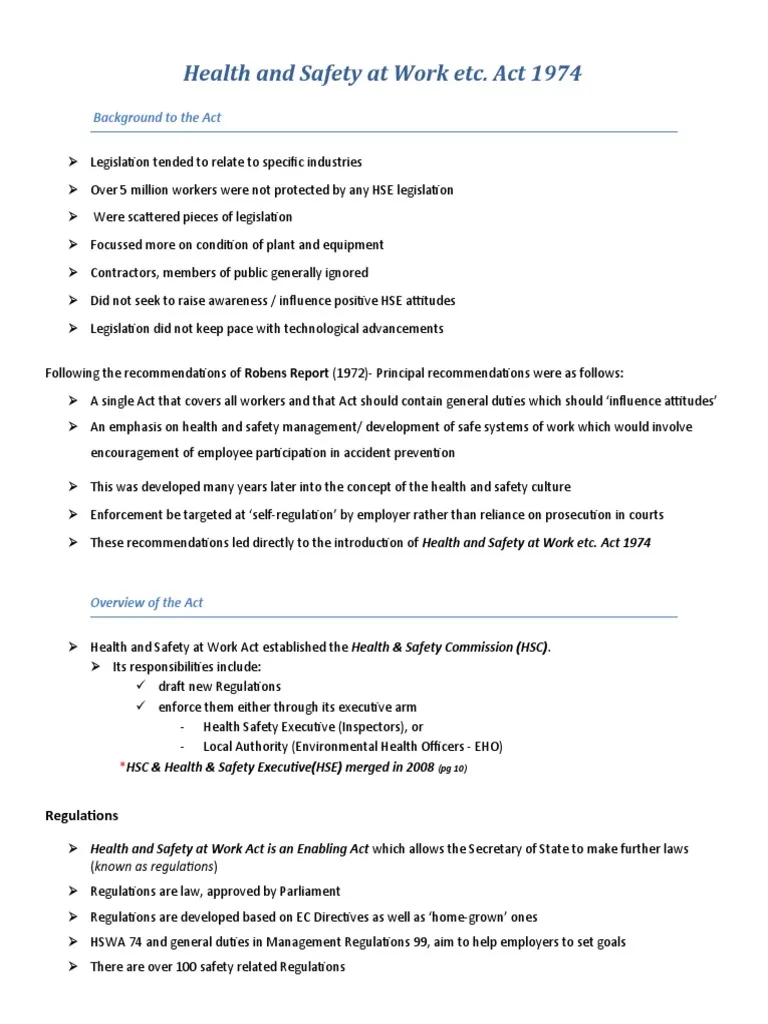 Photo: Health and Safety at Work Act 1974, via imgv2-1-f.scribdassets.com
However, these enhanced obligations effectively disappear once workers reach 18, despite mounting evidence that developmental vulnerabilities persist well into the twenties. This regulatory gap has created a dangerous assumption that 18-year-old workers possess the same risk assessment capabilities as experienced adult employees.
Employers who fail to recognise these extended vulnerabilities face potential liability under general duty of care obligations. Recent court cases have established that employers must consider individual worker characteristics when implementing safety measures, creating potential liability for age-blind approaches that ignore documented developmental factors.
The Apprenticeship Amplification Effect
The government's apprenticeship levy has dramatically increased young worker participation across traditionally high-risk industries including construction, manufacturing, and hospitality. Apprenticeship starts have increased by over 40% in the past five years, with the majority of new apprentices aged 16-24.
This demographic shift has amplified the young worker safety crisis. Apprentices face the double vulnerability of youth inexperience combined with learning environments that often prioritise productivity over comprehensive safety integration. Traditional apprenticeship models that rely on informal mentoring and learning-by-doing approaches frequently fail to provide systematic hazard recognition training.
Moreover, the pressure to demonstrate competency quickly can encourage young apprentices to take risks or avoid reporting safety concerns for fear of appearing incapable. This dynamic creates a particularly dangerous environment where normal youth risk-taking tendencies are reinforced rather than addressed through structured safety protocols.
Beyond Tick-Box Induction: Age-Aware Safety Integration
Effective young worker safety requires abandoning generic induction checklists in favour of age-aware, developmentally appropriate safety integration programmes. These enhanced approaches must recognise that young workers learn differently, process risk information differently, and require different types of support to develop effective safety behaviours.
Successful programmes incorporate interactive, scenario-based learning that allows young workers to practice hazard recognition in controlled environments. Rather than relying on abstract safety rules, these approaches use concrete examples and hands-on exercises that engage young workers' learning preferences whilst building practical safety skills.
Peer mentoring programmes have shown particular effectiveness, pairing young workers with slightly older colleagues who can model appropriate safety behaviours whilst maintaining relatability. This approach leverages young workers' tendency to learn from peers whilst ensuring safety guidance comes from workers with sufficient experience to recognise workplace hazards.
The Supervision Imperative
Enhanced supervision represents perhaps the most critical element of effective young worker safety. However, many UK employers misinterpret supervision as simple observation rather than active safety coaching and support.
Effective supervision for young workers requires designated supervisors with specific training in youth development and safety mentoring. These supervisors must understand how to provide safety guidance that builds confidence rather than undermining young workers' developing autonomy.
Crucially, supervision intensity must decrease gradually as young workers demonstrate competency, rather than following arbitrary timelines based on employment duration. This competency-based approach ensures that safety support matches individual development rather than assuming uniform progression across all young workers.
The Business Case for Investment
Whilst enhanced young worker safety programmes require additional investment, the business case for these initiatives extends far beyond compliance obligations. Young workers who receive comprehensive, age-appropriate safety training demonstrate higher engagement, lower turnover, and stronger long-term safety performance.
Moreover, the legal and reputational risks associated with young worker injuries continue escalating. High-profile cases involving preventable injuries to young workers attract significant media attention and regulatory scrutiny, often resulting in substantial financial penalties and lasting reputational damage.
Regulatory Expectations Are Rising
Recent HSE enforcement trends suggest increasing regulatory focus on young worker safety. Inspectors are paying particular attention to how employers address age-specific vulnerabilities, with several high-profile prosecutions highlighting failures to provide adequate protection for young workers.
This regulatory shift reflects growing recognition that generic safety approaches inadequately protect vulnerable worker populations. Employers who continue relying on age-blind safety protocols face increasing likelihood of enforcement action when young worker incidents occur.
The message from regulators is clear: good intentions and generic compliance programmes are insufficient when protecting young workers. Employers must demonstrate active recognition of age-specific vulnerabilities through tailored safety programmes that address the documented developmental factors contributing to young worker injury rates.
Britain's young workforce deserves safety protection that matches their specific needs and vulnerabilities. The current epidemic of preventable young worker injuries represents both a moral failure and a regulatory time bomb that forward-thinking employers can no longer afford to ignore.