Divided Duties, Multiplied Dangers: How Unclear Lease Terms Leave UK Hospitality Operators Exposed to Criminal Safety Charges
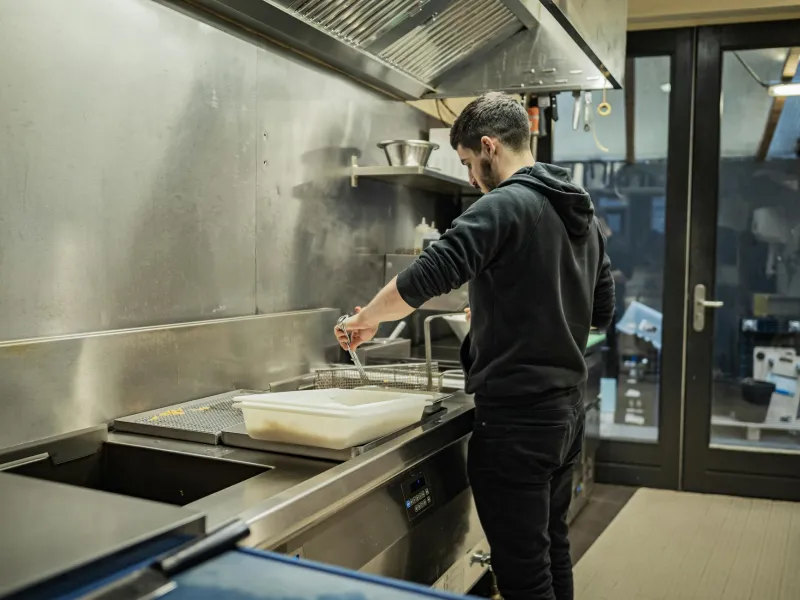
In the labyrinthine world of UK commercial property law, hospitality businesses face a peculiar and dangerous predicament. Unlike owner-occupied premises where safety responsibilities are crystal clear, leased establishments operate within a complex framework of divided duties that can leave critical safety obligations unaddressed—and business operators facing criminal charges.
The hospitality sector's reliance on leased premises has created a perfect storm of regulatory confusion, where traditional lease structures fail to account for modern safety legislation. The result is a compliance minefield that claims victims with alarming regularity across Britain's pubs, restaurants, and hotels.
The Anatomy of Lease-Based Liability
Commercial leases typically divide responsibilities between "landlord's fixtures" and "tenant's fixtures," a distinction that predates much of today's safety legislation. This archaic framework struggles to accommodate modern safety systems that blur the line between structural elements and operational equipment.
Consider fire suppression systems: the structural sprinkler pipes may be the landlord's responsibility, whilst the control panels and detection equipment fall to the tenant. When an HSE inspector discovers a malfunctioning system, determining liability becomes secondary to establishing criminal responsibility—and both parties may find themselves in the dock.
The Court of Appeal's decision in Southwark London Borough Council v Mills established that landlords cannot contract out of their statutory duties under the Housing Act, but hospitality premises face additional layers of complexity under the Regulatory Reform (Fire Safety) Order 2005, Health and Safety at Work Act 1974, and Gas Safety (Installation and Use) Regulations 1998.
Fire Safety: Where Responsibility Burns Both Ways
Fire safety obligations present the most treacherous terrain for hospitality operators. The "responsible person" under the Fire Safety Order is typically the employer or person in control of the premises—but leased hospitality venues often have multiple parties exercising different types of control.
A restaurant tenant may control daily operations whilst the landlord maintains structural fire exits, emergency lighting circuits, and central fire alarm panels. When fire safety failures occur, both parties face potential prosecution under Article 32 of the Fire Safety Order, which carries unlimited fines and up to two years' imprisonment.
The landmark case of R v Associated Octel demonstrated that criminal responsibility can extend beyond direct control, encompassing situations where parties have sufficient influence to prevent harm. For hospitality operators, this means that claiming "it's the landlord's responsibility" provides no protection if they could have reasonably identified and addressed safety deficiencies.
Gas Safety: The Silent Killer in Shared Premises
Gas safety regulations create another layer of complexity for hospitality businesses operating commercial kitchens in leased premises. The Gas Safety (Installation and Use) Regulations place duties on both landlords and tenants, but the interaction between these obligations remains poorly understood.
Landlords must ensure gas installations are safe when letting premises and arrange annual safety checks for appliances they provide. However, hospitality tenants typically install their own commercial cooking equipment, creating a patchwork of responsibilities that can leave critical components uninspected.
The tragic consequences of this confusion were highlighted in the HSE's prosecution of a Manchester restaurant chain, where poorly maintained gas connections in a basement kitchen led to a serious incident. Both landlord and tenant faced charges, with the court finding that lease clauses attempting to transfer gas safety obligations were ineffective against criminal liability.
Structural Escape Routes: When Exits Become Liabilities
Escape route maintenance presents perhaps the most dangerous grey area in hospitality lease arrangements. Structural escape routes—including external fire escapes, emergency exits, and corridor lighting—typically remain under landlord control, whilst tenant areas must maintain clear egress paths.
This division creates obvious risks: a restaurant may meticulously maintain clear internal routes whilst the landlord neglects external stairwells or emergency lighting systems. When evacuation becomes necessary, the failure of any component in the escape chain can prove catastrophic.
The HSE's enforcement approach focuses on outcomes rather than contractual arrangements. Following the R v Gateway Foodmarkets Ltd precedent, courts have consistently held that commercial operators cannot delegate their duty of care through lease clauses, regardless of how comprehensively such clauses appear to transfer responsibility.
Audit Strategies for Hospitality Operators
Given these complex liability webs, hospitality businesses must adopt proactive audit strategies that transcend traditional lease boundaries. The first step involves conducting a comprehensive responsibility mapping exercise, identifying every safety-critical system and determining both contractual and practical control.
Operators should implement monthly joint inspections with landlords, creating documented evidence of system conditions and maintenance needs. This collaborative approach not only improves safety outcomes but also demonstrates due diligence in criminal proceedings.
Critical audit points include:
- Fire alarm system integration between landlord and tenant areas
- Emergency lighting circuit continuity across responsibility boundaries
- Gas supply isolation procedures and emergency shut-off accessibility
- Escape route lighting and surface maintenance throughout egress paths
- Structural fire door operation and seal integrity
- Ventilation system maintenance affecting kitchen extraction
Insurance and Indemnity: The False Safety Net
Many hospitality operators rely on insurance coverage and lease indemnity clauses to protect against safety-related liabilities. However, these commercial protections provide no shield against criminal prosecution, and insurance policies typically exclude cover for intentional regulatory violations or gross negligence.
The better approach involves treating safety compliance as a fundamental operational requirement rather than an insurable risk. This means investing in robust monitoring systems, regular professional inspections, and documented maintenance programmes that demonstrate ongoing commitment to regulatory compliance.
Moving Forward: Best Practice for Shared Premises
The solution to hospitality safety compliance in leased premises requires a fundamental shift from adversarial lease interpretation to collaborative safety management. Forward-thinking operators are negotiating "safety partnership clauses" that establish joint inspection schedules, shared maintenance costs, and coordinated emergency procedures.
These arrangements recognise that effective safety management cannot be constrained by property law boundaries. When implemented properly, they create clear accountability frameworks whilst ensuring comprehensive coverage of all safety-critical systems.
For hospitality businesses operating in leased premises, the message is clear: safety compliance cannot be outsourced through lease clauses, and criminal liability cannot be transferred through contractual arrangements. The only effective protection lies in taking active responsibility for identifying and addressing safety risks, regardless of theoretical property law boundaries.
As enforcement activity continues to intensify across the hospitality sector, operators who fail to navigate these complex responsibility webs may find themselves facing not just business disruption, but criminal conviction and imprisonment. In this high-stakes environment, professional safety auditing becomes not just good practice, but essential protection against potentially catastrophic legal consequences.